You don’t have any Active Subscription. Subscribed with another email. Logout and Login with that one. Your active subscription(s) Account subscription benefits alongside Premium Stories, Editorials, Opinions and more.
Unlock these with Subscription Products you've access to Additional Subscription Benefits Need help with your subscription. Updated - June 16, 2026 02:15 pm IST On average, one in 17,000 people is affected by albinism worldwide.
| Photo Credit: Pexels A condition which affects not just humans, but also animals and plants, albinism is a result of little or no production of melanin, a natural pigment responsible for determining the colour of human skin, hair, and eyes.
Let’s explore… On average, one in 17,000 people is affected by albinism worldwide. This often changes in certain areas like sub-Saharan Africa, where the rates are much higher. Yet, the stigmatisation around this genetic condition still stands tall in our society is unfortunately the sad truth.
An albino turtle hatchling sits among other Arrau turtles (podocnemis expansa) ahead of their release at the Abufari Biological Reserve, in Tapaua, Amazonas state, Brazil.
| Photo Credit: AP Far from being a disease, albinism is a congenital disorder caused by mutations in genes involved in melanin synthesis (the complex biochemical process by which specialised cells called melanocytes produce melanin pigments within organelles called melanosomes).
So basically, it stems from defects in the cells that produce melanin. Albinism is not just unique to human beings; it can be seen in a variety of living beings, including animals and even plants.
Animals tend to have traits like white or pale fur, feathers, or skin and often distinctive pink or red eyes. This rare genetic mutation often causes poor eyesight, high sun sensitivity, and increased vulnerability to predators due to a lack of camouflage among animals.
In this undated photo released by Borneo Orangutan Survival (BOS) Foundation, Alba, an albino orangutan, sits on a branch of a tree while eating watermelon at Nyaru Menteng Orangutan Rehabilitation Center in Central Kalimantan, Indonesia.
| Photo Credit: AP On the other hand, albino plants are quite rare and are characterised by a total or partial lack of chlorophyll, causing leaves and stems to appear white, translucent, or pale yellow.
Due to a lack of chlorophyll, these plants are often unable to photosynthesise (the biological process by which plants convert light energy (sunlight) into chemical energy (glucose) to fuel their metabolism). This leads to stunted growth, nutrient deficiencies, and often premature death.
Some plants are partially albino, allowing them to survive longer than completely albino species, which do not have chlorophyll at all (they are usually fully white). In rare cases, they survive by acting as parasites and relying on the roots of neighbouring green plants for nutrients.
Albinism is a lifelong condition which does not have a particular cure as such.
The treatments are lifestyle changes like intensive sun protection, such as using high SPF sunscreen and UV-blocking clothing, regular dermatological checkups and eye care to handle the eye-sight problems and photophobia which mostly accompany albinism.
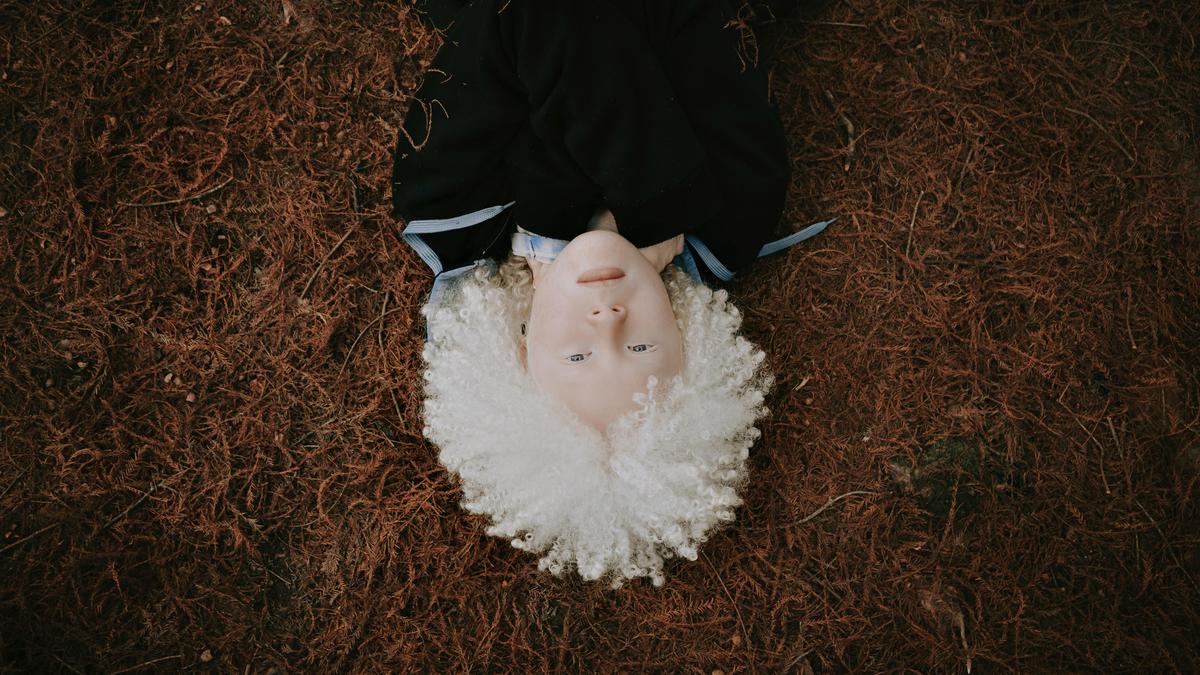
Individuals with albinism are highly susceptible to sunburn. Most people with albinism live normal lifespans and are just as healthy as anyone else. An albino model.
| Photo Credit: Unsplash Albinism reveals the intricate dance of genetics and environment, challenging us to prioritise empathy and science over superstition in society. While kindness might seem quite basic, it is exactly the lack of the same which often leads to isolation and bullying.
It is extremely important to debunk superstitions and myths while empowering people through self-love and confidence-building. A simple first step to all of the above. — building your knowledge tank and ensuring people around you understand the science behind our bodies.
Published - May 25, 2026 10:00 am IST In School / health / public health training / mental health / human science / human science / human rights / human interest / genetics / medicine / leisure (general) / society Terms & conditions | Institutional Subscriber Comments have to be in English, and in full sentences.
They cannot be abusive or personal. Please abide by our community guidelines for posting your comments. We have migrated to a new commenting platform. If you are already a registered user of The Hindu and logged in, you may continue to engage with our articles.
If you do not have an account please register and login to post comments. Users can access their older comments by logging into their accounts on Vuukle.