In an unusual instance, Bharatiya Janata Party (BJP) leader Ram Madhav was bewilderingly candid recently while detailing a litany of rather 'humbling' acts that India undertook to make US President Donald Trump happy.
These moves largely revolved around ceasing the purchase of oil from Russia and from Iran, as well as accepting, without any show of resistance, the high tariff that Trump slapped on India.
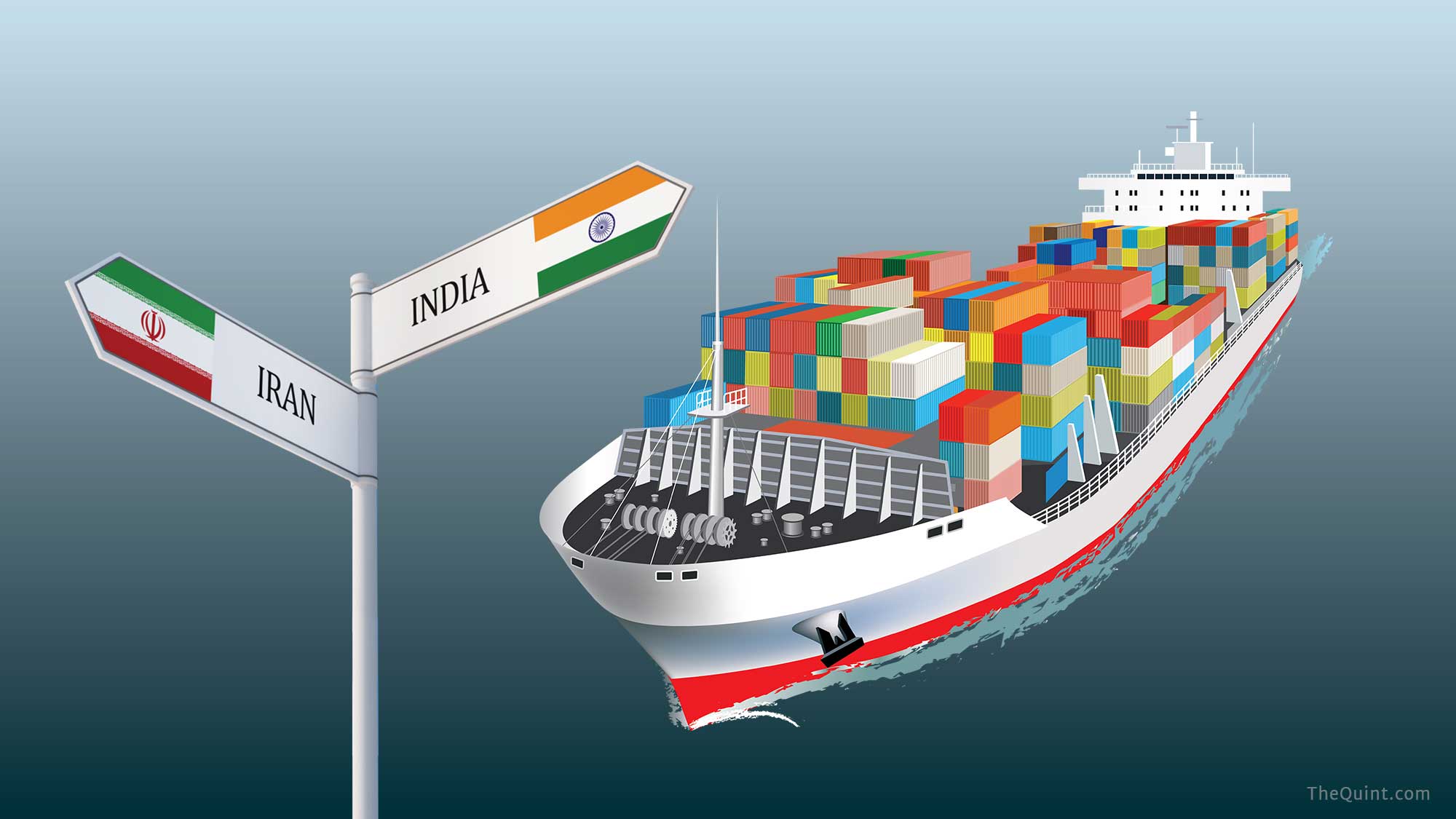
Madhav may have forgotten to include how India quietly gave up its management rights over Iran’s Chabahar port—a deep-sea civilian port in the Gulf of Oman—under US pressure. In a resigned note, Madhav did, however, wonder what more India can do to satisfy the US.
The tragedy is that it just let it go on 26 April 2026, the day the US ended its conditional waiver to the Chabahar port. There are plenty of indications that India was ambivalent about Chabahar.
Either it was prescient about the lack of viability of this project with US sanctions always breathing down India’s neck or it was cognisant of the antagonism that it was feeding in the West Asian countries, primarily due to its growing relationship with Iran through the Chabahar project.
Saudi Arabia and the UAE, with whom India has close ties, have wondered why India was so keen on Chabahar when its variegated needs were met by an assortment of Gulf ports.
A diplomat, speaking anonymously to The Quint, wondered why is India so keen on Iran where there are just 10,000 of its citizens. In comparison, he helpfully pointed out that a crore Indians stay in the Gulf and send remittances that help sustain India’s cash-strapped economy.
He was of the view that India was giving more importance to its "artificial needs" than its "real ones" by going after Iran.
This issue became far more compelling after the collapse of the Soviet Union, and after countries like Uzbekistan, Kazakhstan, and several others that gained independence from Russia.
India also had to rebuild ties with Afghanistan after it unhinged itself from Soviet as well as pro-Pakistan grouping that ruled Kabul. This redrawing of political maps saw connectivity through roads, railway, and ports lending meaning to decentralisation.
It was around this time that Iran offered India the management of Chabahar port. Located in the Makran coast of Oman, Chabahar and India are a natural fit. It is part of the Sistan Baluchistan province and has a shared border and language with Pakistan and northern India.
Interestingly, Chabahar came into existence a few years after China signed a deal with Pakistan to build the Gwadar port. The big question that remains unanswered is, why did the Iranians not hand over the Chabahar to the Chinese as well.
In 2016, the three countries—Iran, India, and Afghanistan—signed the Chabahar deal. The plan was for Afghanistan to relocate their companies and abandon the overland route through Karachi, allowing active use of the Mundra port in Gujarat.
It all fit well but India, which had been given Chabahar’s Shahid Beheshti Terminal to manage, found it difficult to move resources even after the US removed sanctions from it. On many occasions, India had to seek the help of the Russians to move valuable foreign exchange to meet its commitments.
The Iranians often complained that India was not a good partner on Chabahar, but to their credit they did not annul the contract even after it was up for renewal with an Indian company, India Port Global Limited (IPGL). The contract was short circuited due to American sanctions.
It is a matter of conjecture how much Iran would have benefited if the three pieces of the jigsaw puzzle would have been in place.
Though war has not touched Chabahar—reports of some bombing at its Second World War airfield, Konarak, notwithstanding—it is possible that Iran would have benefited from trade between the two countries.
Till it decided to end its contractual obligation, India had spent about $120 million or Rs 400 crore on the project. It would have been more, had it laid a 628-km railway line to Zahedan from Chabahar as planned.
Initial figures suggested that India had to spend about $370 million in doing up the Shahid Beheshti port, but it was scaled down. However, though the Indian company did not meet its targets, it does not reveal whether it earned any profit or not: From 2018 to 2025, the IPGL handled 8.
7 million tons of cargo, which includes 134,082 containers. The tragedy is that the Indian government paid heed to the US treasury's advisory on the imposition of sanctions on Iranian entities, even as it saw a sudden pick up in the volume of cargo from 2024 to 2025.
India, reports suggest, tried to lobby furiously for sanctions—though there is no evidence—to be lifted, but US did not relent.
Opposition parties have been critical of this meek surrender to US pressure, but the Ministry of External Affairs has claimed that India is still trying to get back Chabahar.
The truth of why we lost the Iranian port probably lies in the fact that the Middle East, not just Trump, would approve of India giving up Chabahar. (Sanjay Kapoor is a veteran journalist and founder of Hardnews Magazine.
He is a foreign policy specialist focused on India and its neighbours, and West Asia. This is an opinion piece. All views expressed are the author’s own. The Quint neither endorses nor is responsible for them. ).